True scale · measured where known · generated beyond

COSMINOVA

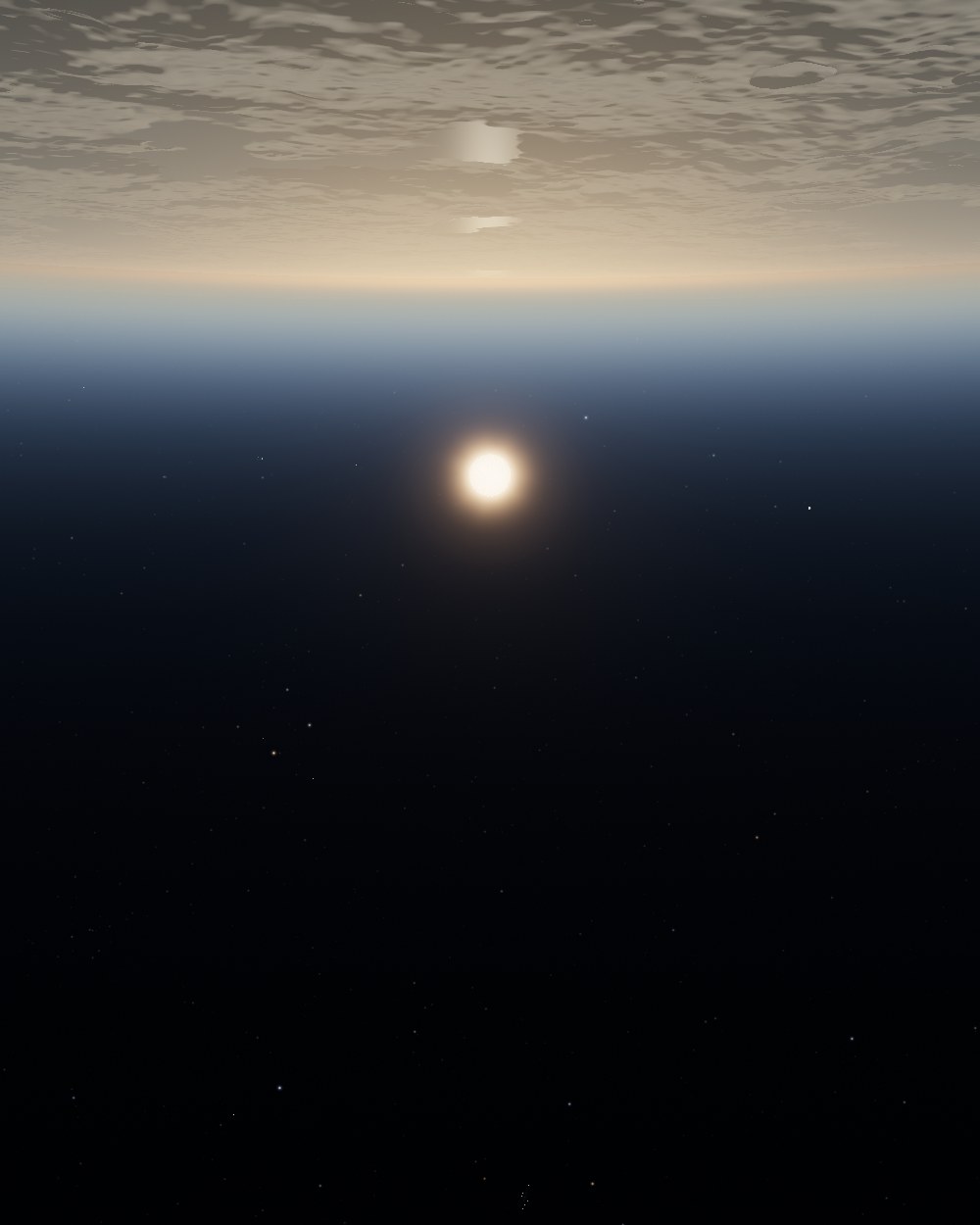
A universe at true scale, and a sky you can stand under. The planets, 1.1 million catalogued stars and known galaxies sit at their measured distances; past the edge of the catalogues, stars, worlds and galaxies are generated — and labelled as generated. From a few metres above a crater floor outward, without a cut or a scale change.

The demo needs a browser with WebGL2 — any recent Chrome, Edge, Firefox or Safari.

From the creator

Why I built Cosminova

I spend a lot of nights at a telescope. You find Saturn, then a faint smudge that turns out to be a galaxy, and through the eyepiece both look painted on the same dark surface. Numbers like 1.4 billion kilometres or 2.5 million light-years are easy to repeat and impossible to feel.

I wanted one place where those distances are real and continuous: stand on the ground under the actual sky, then keep pulling back — past the Moon, the planets, the nearest stars, the Milky Way — without a single cut. The emptiness between things is the part I most wanted to see, so nothing here is moved closer to make it fit.

— Grant Su
Began
26 August 2026. The first public build went up on 5 September.
The first version
A realistic night sky you could zoom into: catalogue stars at their real positions, seen from Earth.
The question that bothered me
Could a single scene hold a crater floor and a galaxy cluster at true scale, with no cuts between them?
Why I kept going
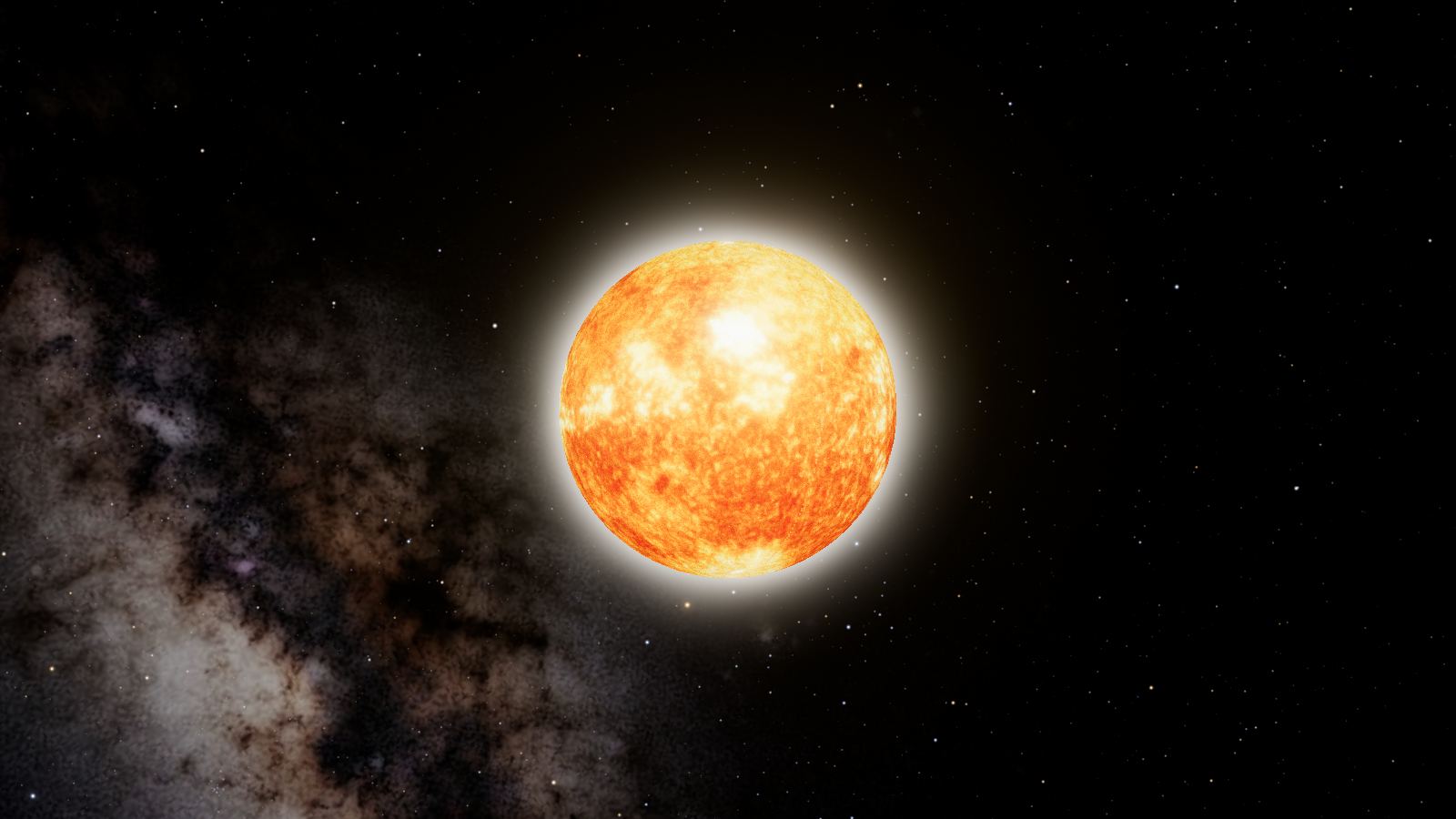
Every fix exposed something I did not understand yet — why the Martian sunset is blue, why a double runs out of precision ten megaparsecs out, why Betelgeuse would swallow the orbit of Mars.
My part
The idea, what it should do and look like, the real-scale rules, and testing every change. I wrote much of the early code myself, then used AI coding agents in Cursor to bring it up to this level of quality.

The engine

Measured where it can be, generated where it can't

Built on Three.js and WebGL2 with no game engine underneath. Orbits, surfaces, star positions and galaxies come from catalogues wherever someone has measured them. Beyond that, stars, planets, black holes and galaxies are generated by rules taken from the real populations, and the info panel marks each one as generated. Either way, nothing is moved closer or scaled up to look better on camera.

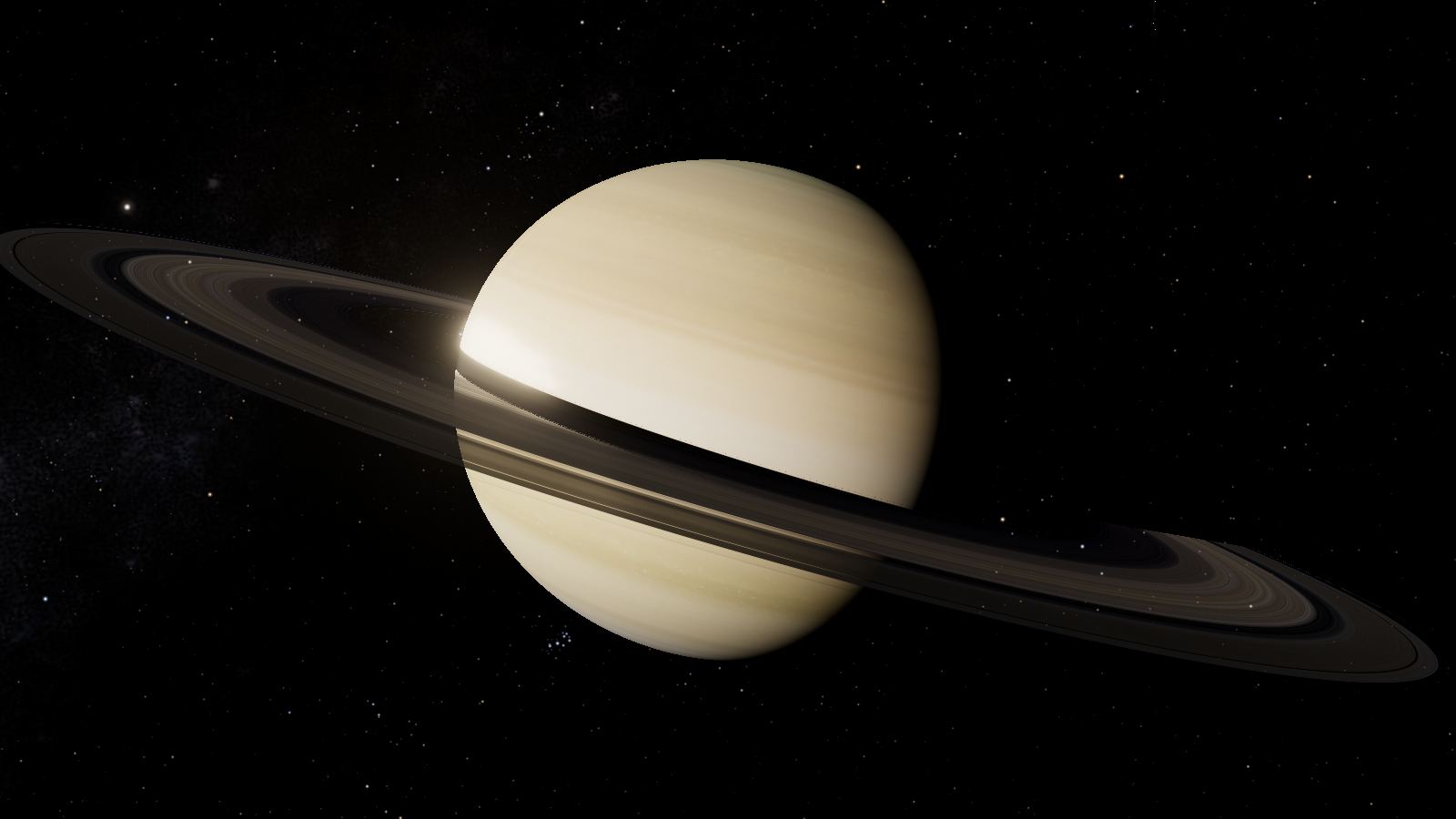
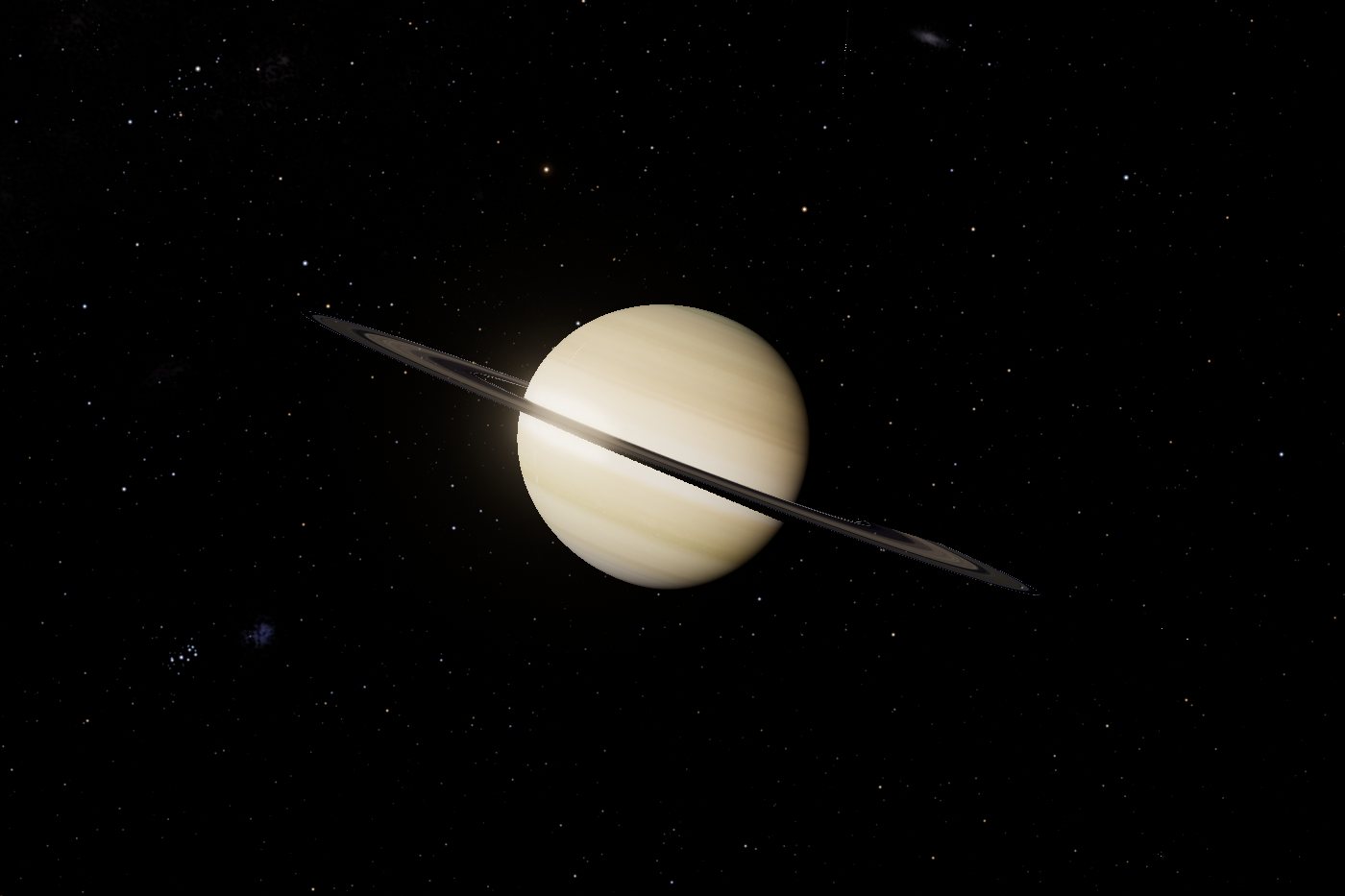
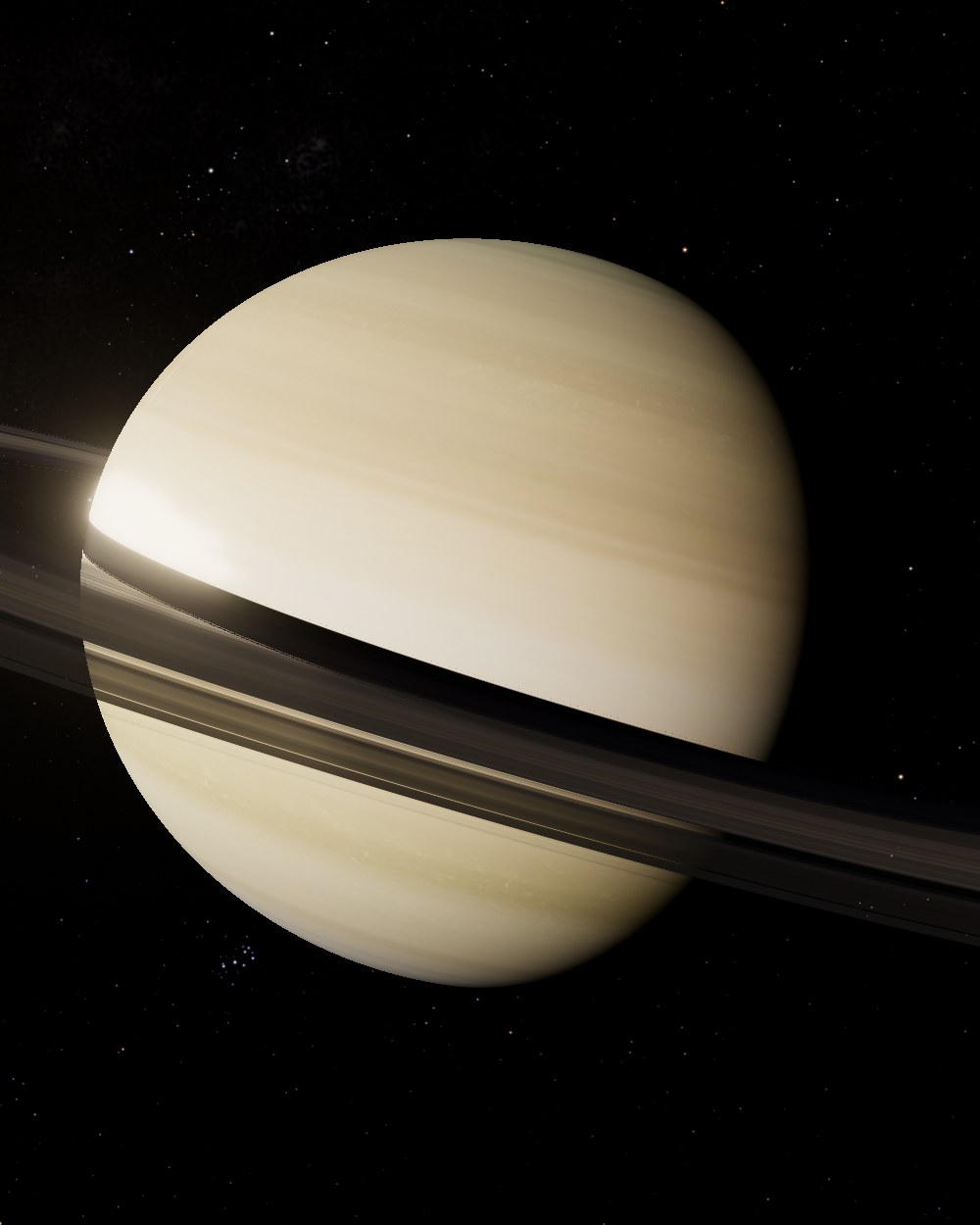
Saturn small in the frame, its rings edge-lit, against a dense starfield

True scale, no cheating

Bodies are placed by ephemeris at their real separations and drawn at their real radii. The camera crosses thirteen orders of magnitude without a loading screen or a hidden change of units — the depth buffer is logarithmic so a rover and a gas giant can share one frame.

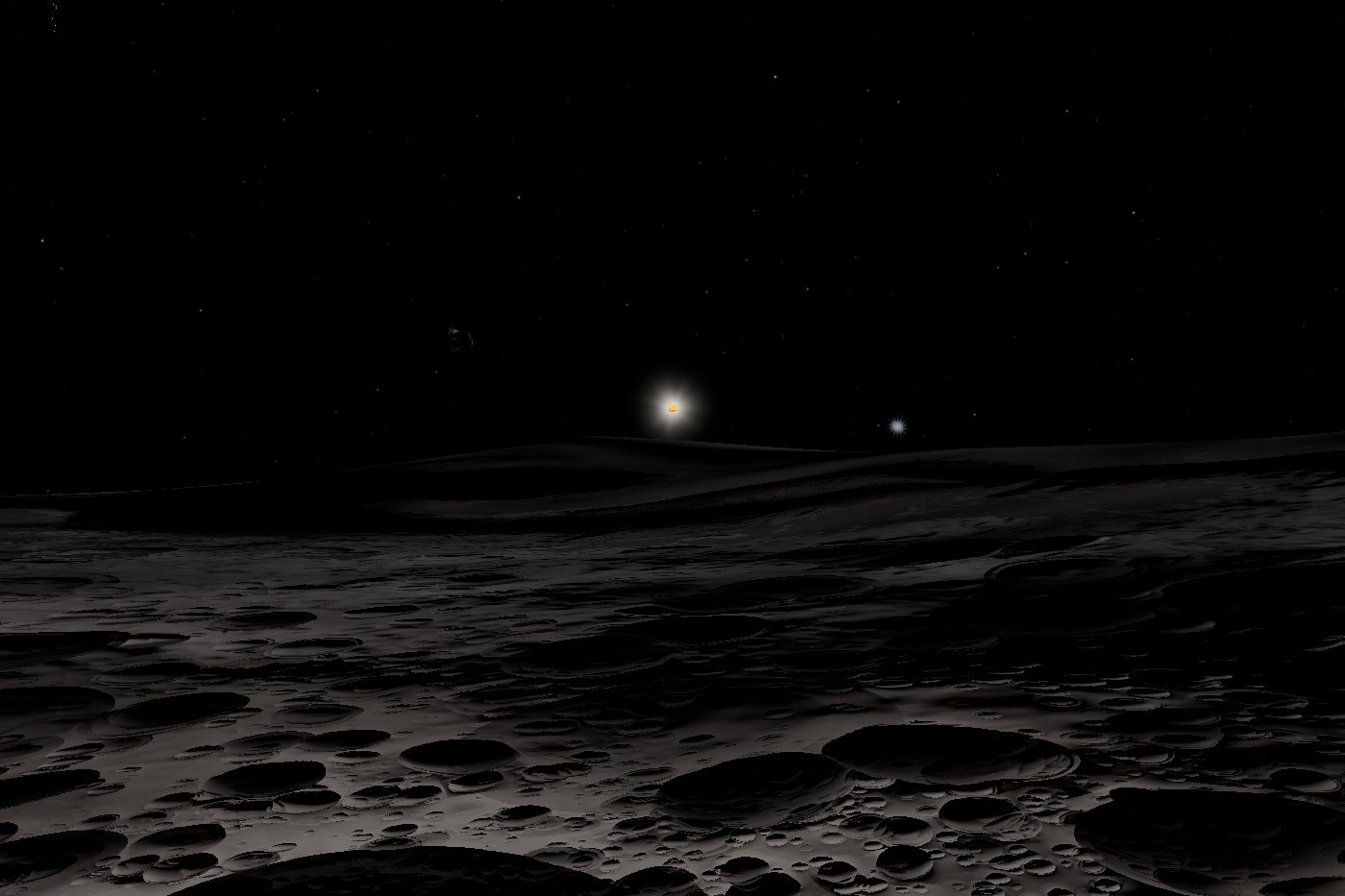
The lunar surface under a low sun, craters raking long shadows toward the camera

Surfaces from measurement

Terrain is spacecraft imagery over real elevation, streamed as a level-of-detail cubesphere. The Moon's relief comes from Lunar Orbiter Laser Altimeter data, so a crater you descend into is the crater that is actually there. The shot above is at a grazing sun, because relief is invisible at noon.

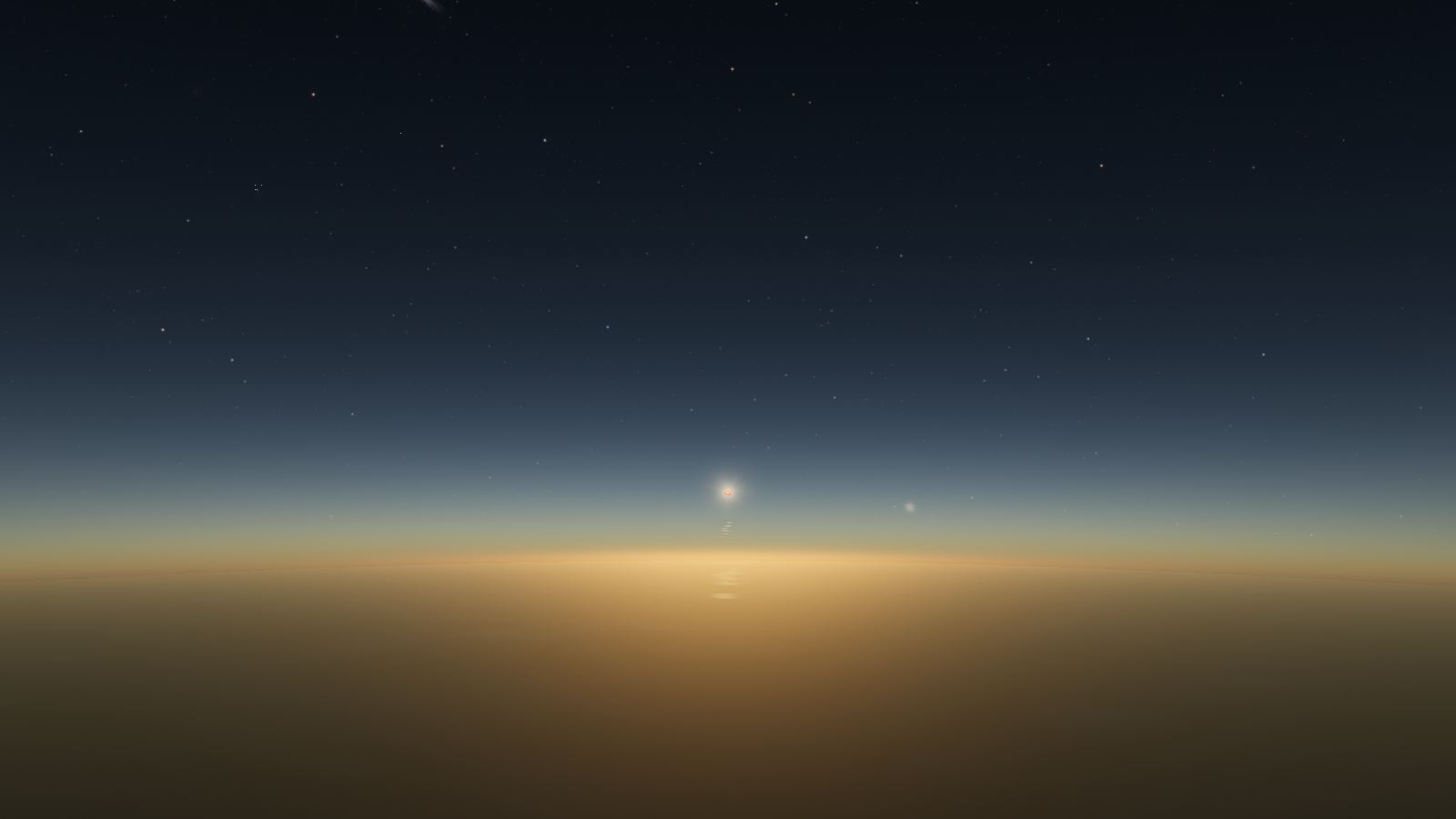
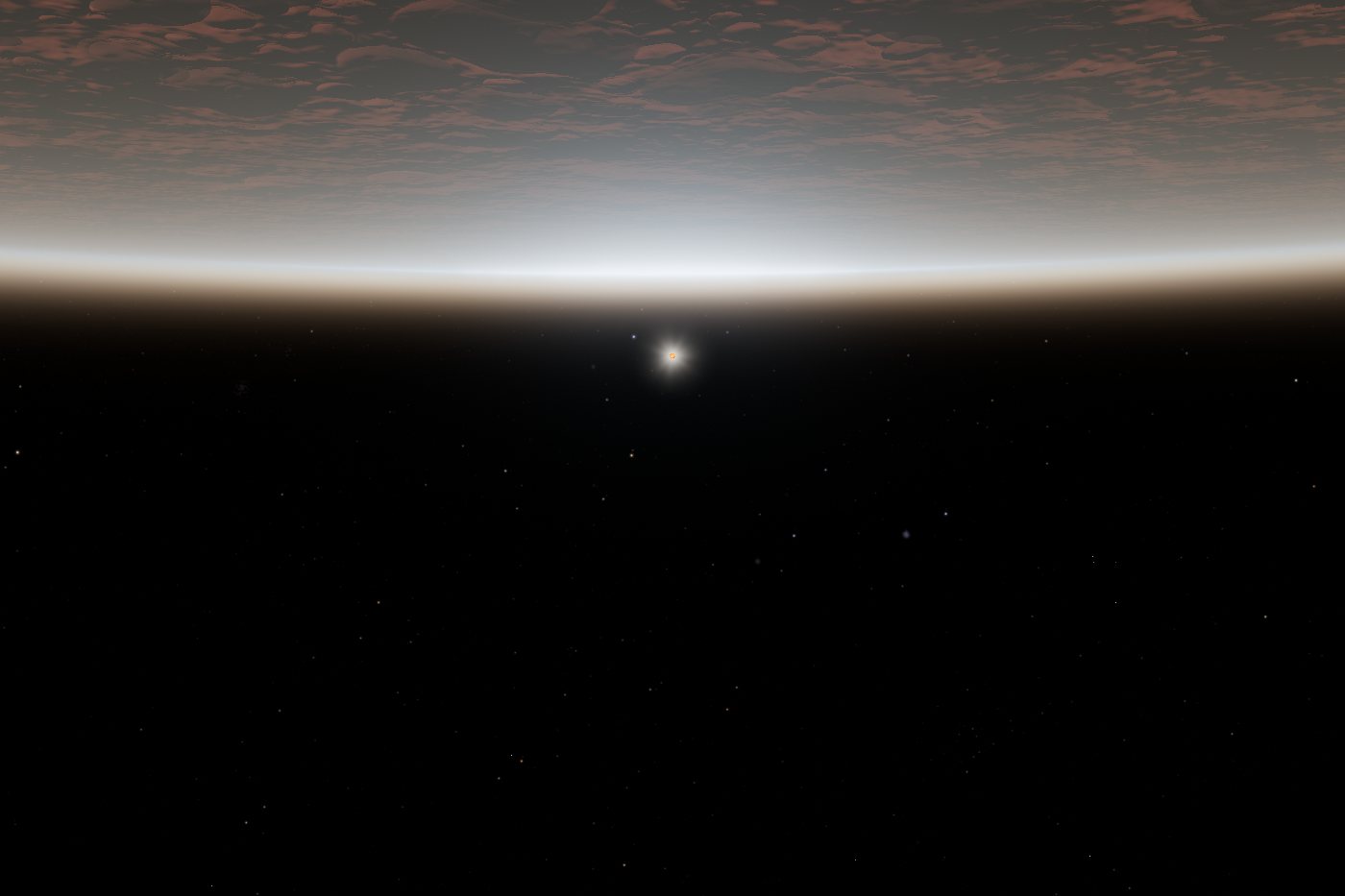
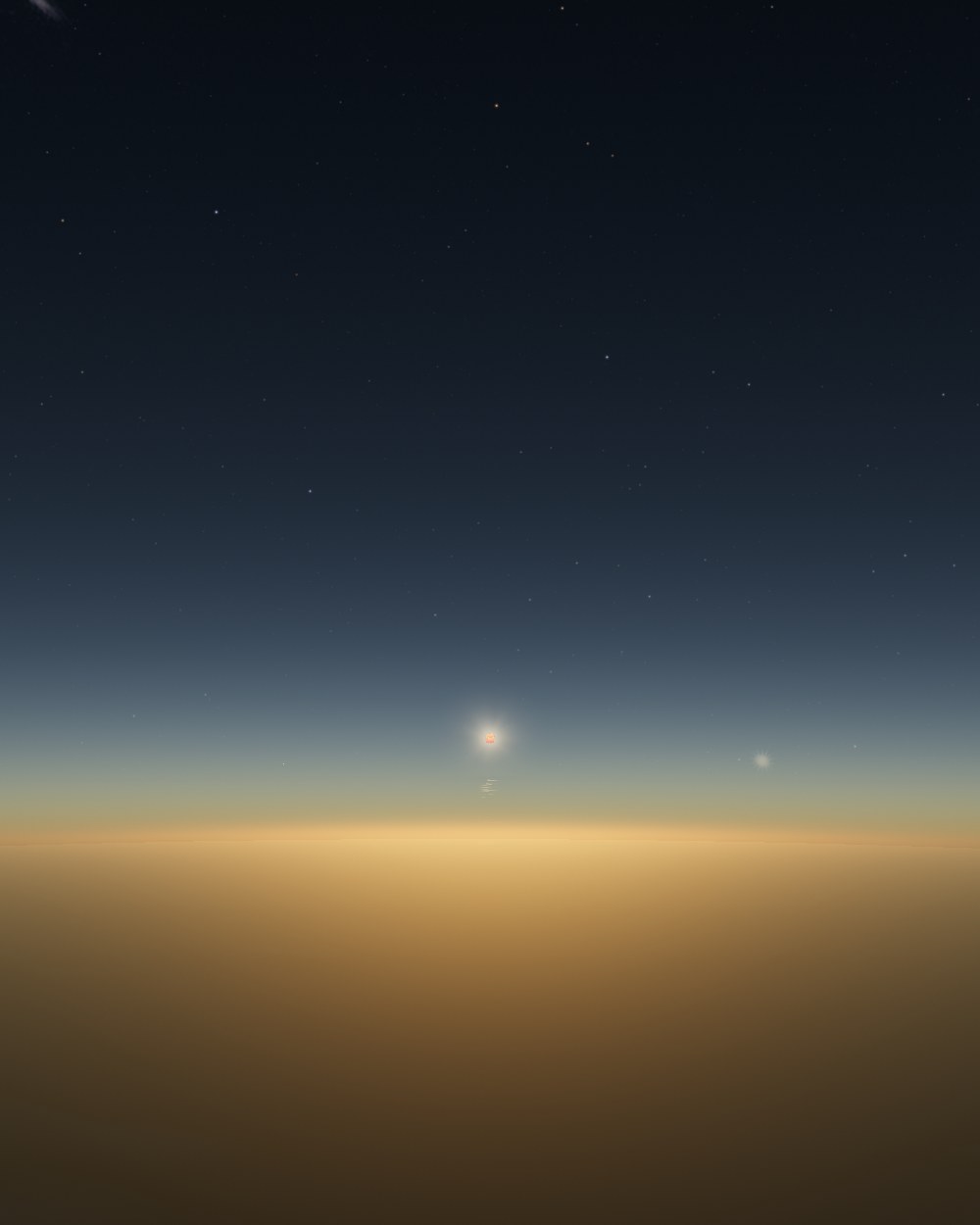
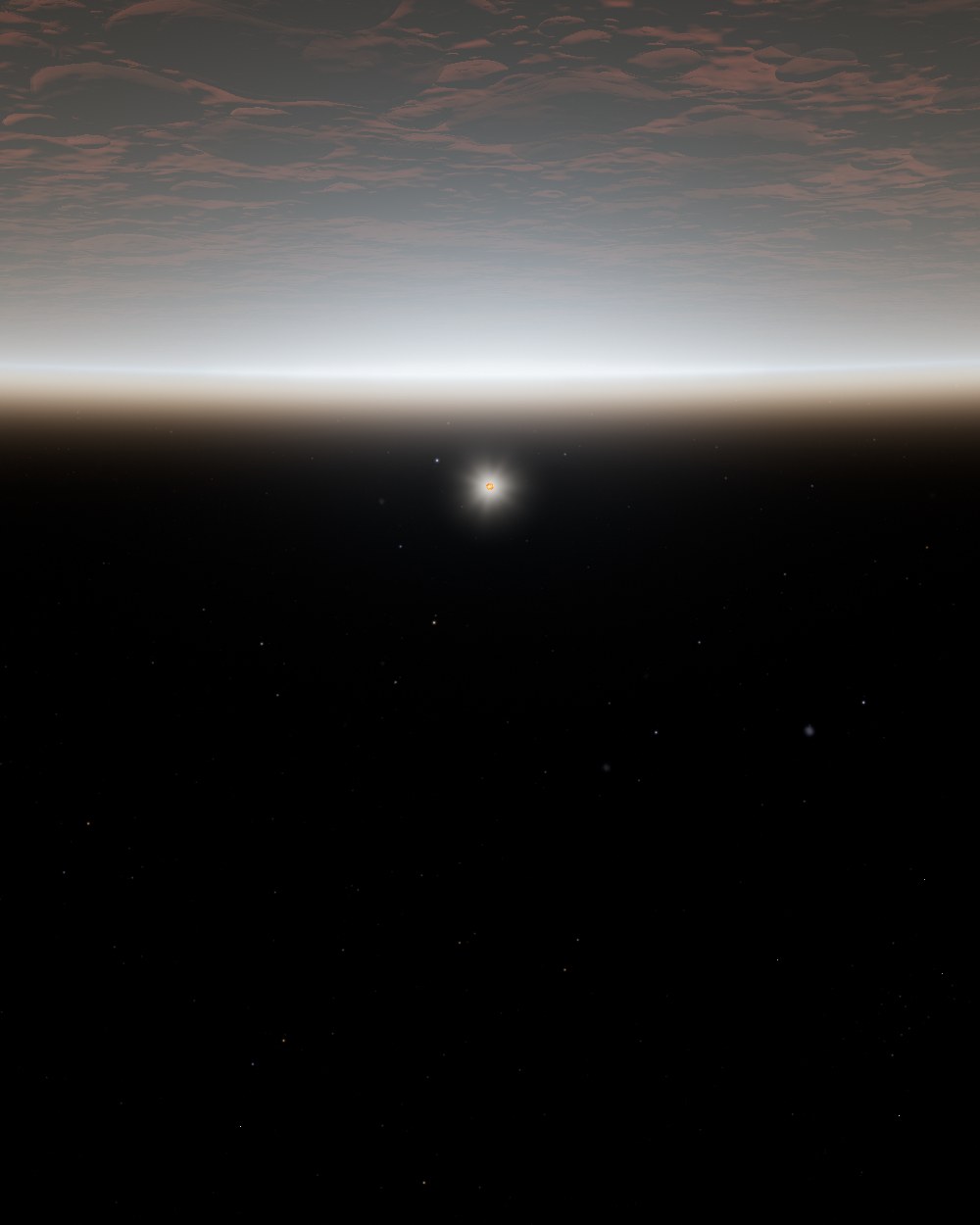
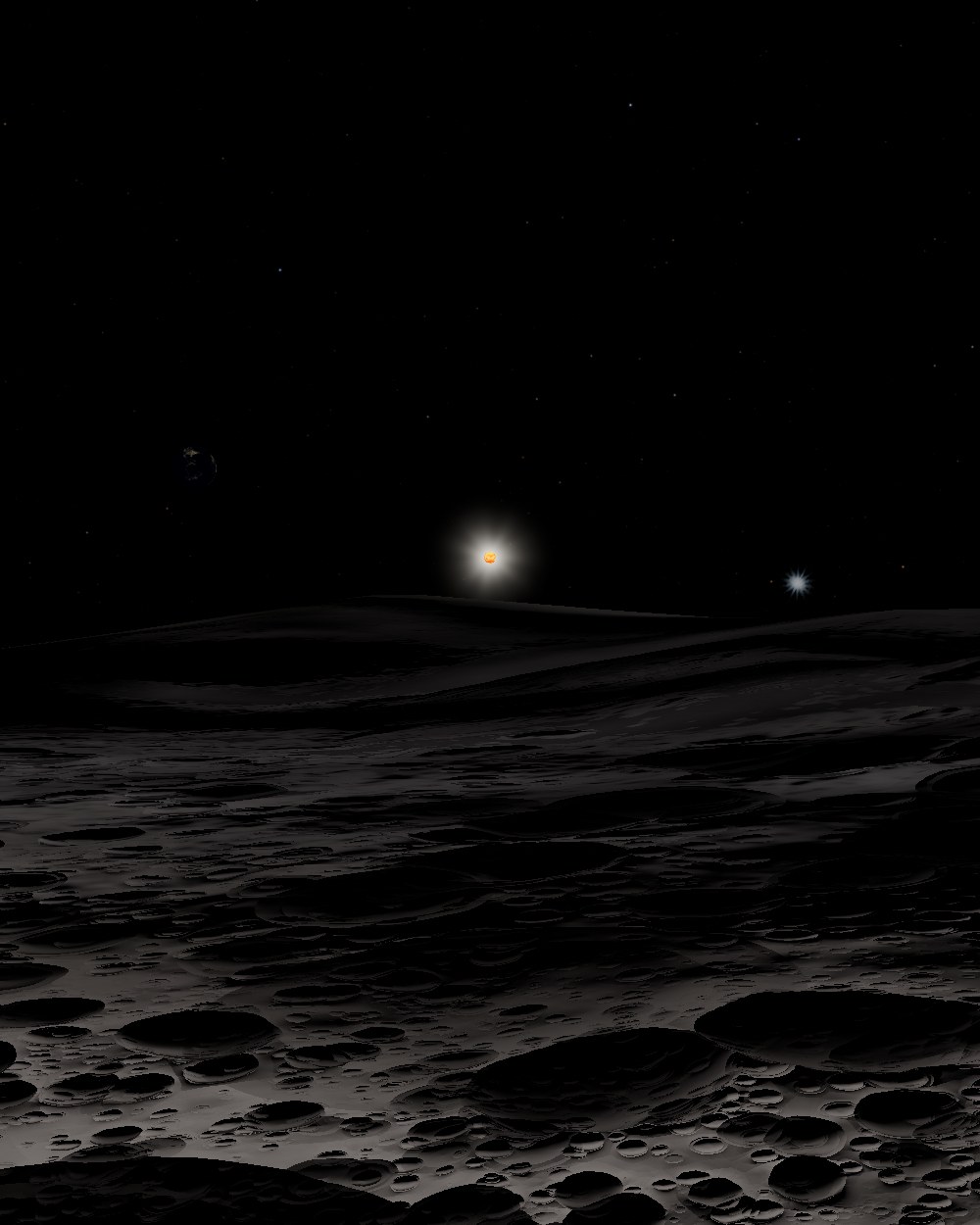
The sun on the Martian horizon, the dusty sky graded from pale blue to brown

Atmospheres that scatter

Skies are integrated per-wavelength through Rayleigh and Mie scattering rather than tinted by hand. It is the same calculation that makes Earth's sunset red and, with a thinner atmosphere and more dust, makes the glow around the Martian sun come out blue.

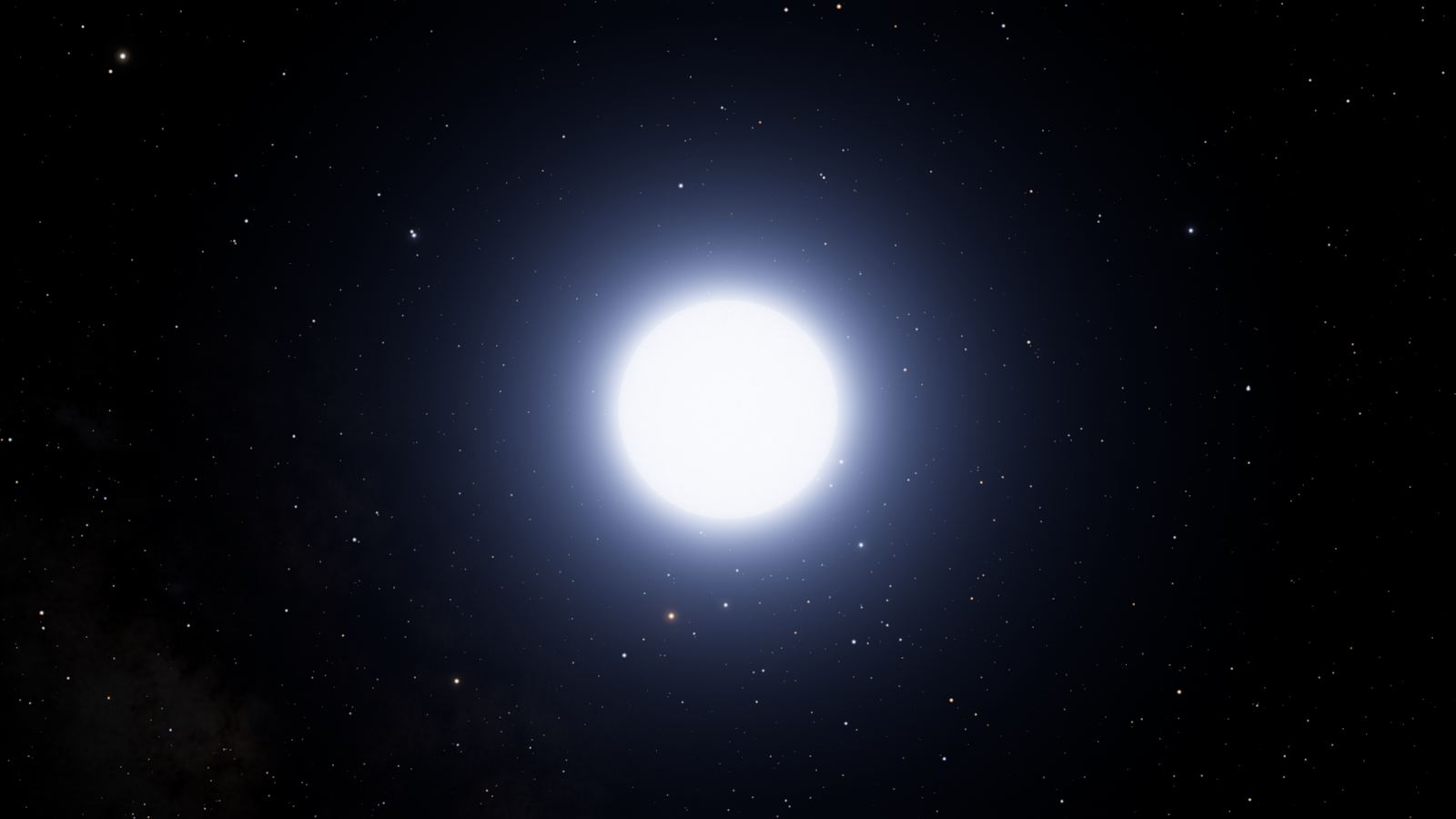
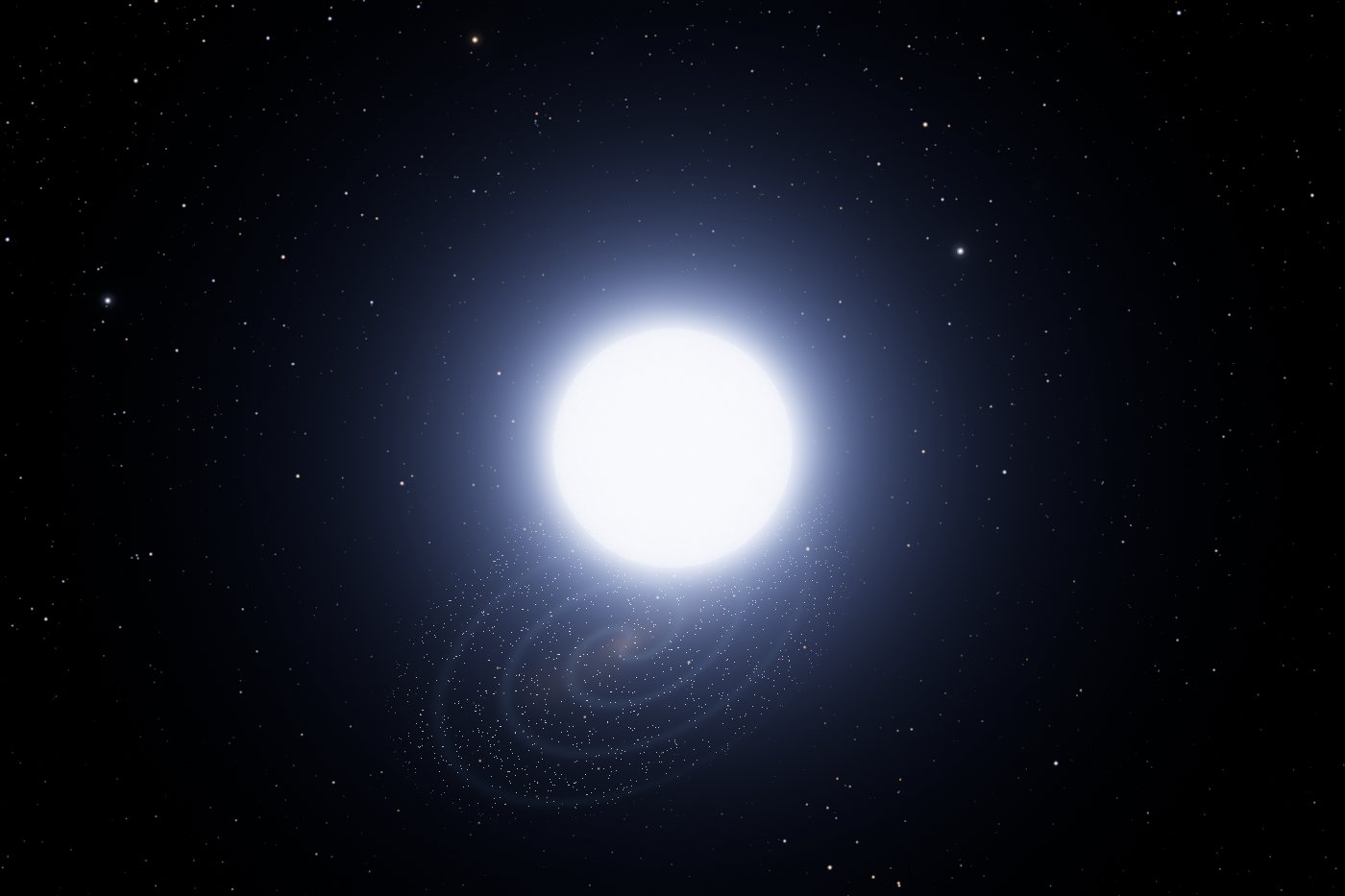
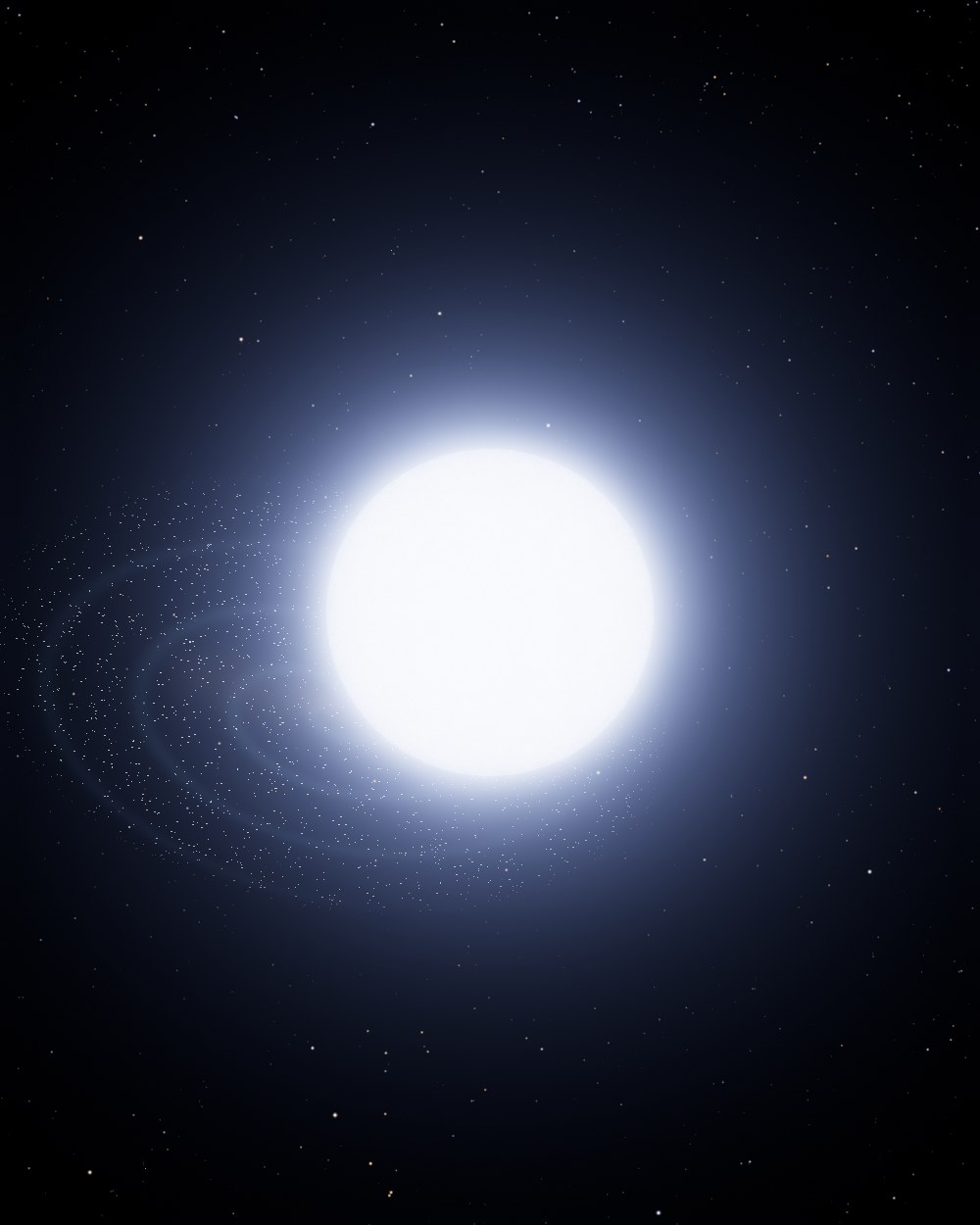
Sirius as a blue-white disc wrapped in a wide blue halo

Stars with real physics

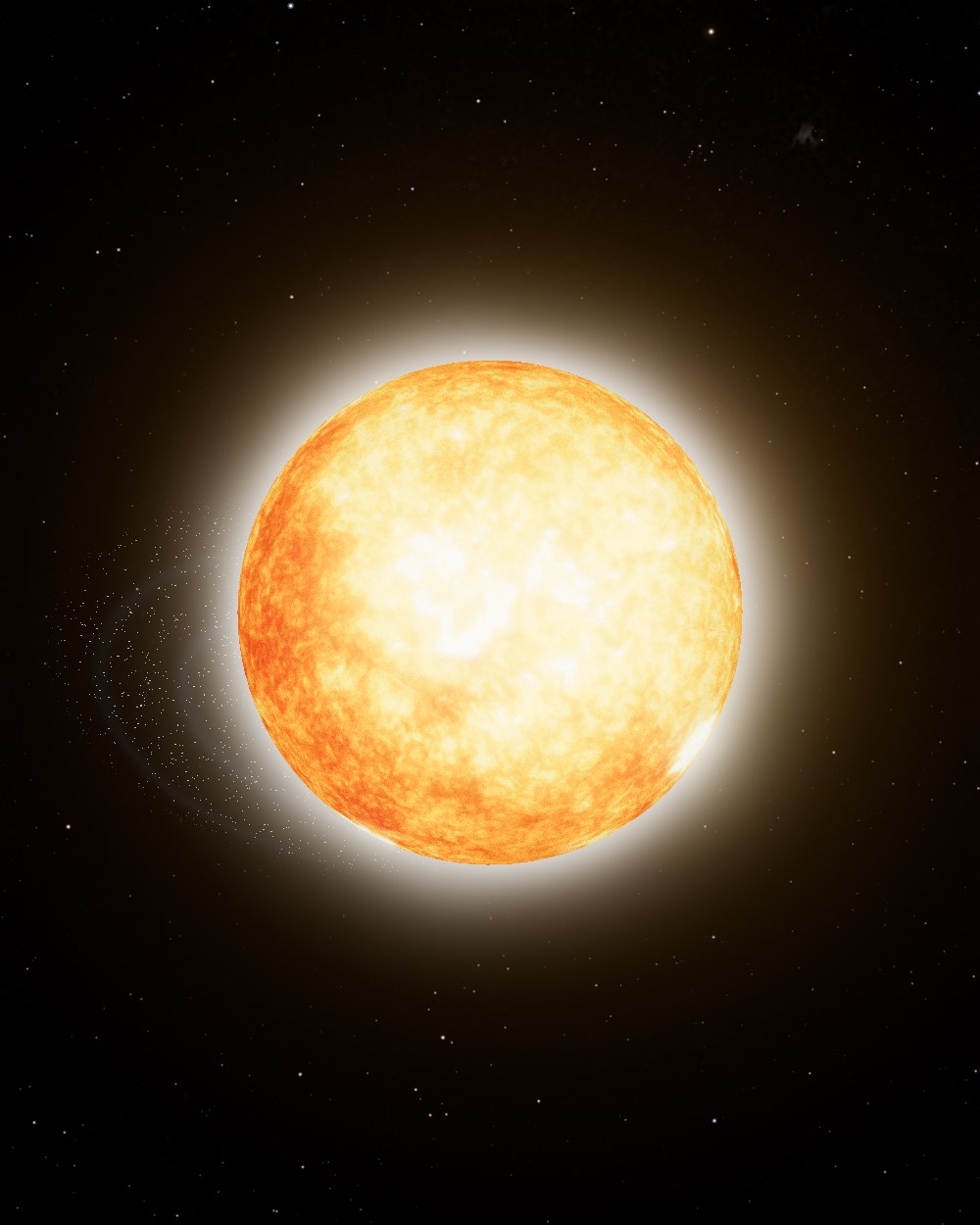
Radii come from luminosity and spectral type through Stefan–Boltzmann, and colour from temperature — which is why Sirius above is blue-white rather than yellow. The same arithmetic puts Betelgeuse at 712 solar radii: 3.3 astronomical units, wide enough to swallow the orbit of Mars.

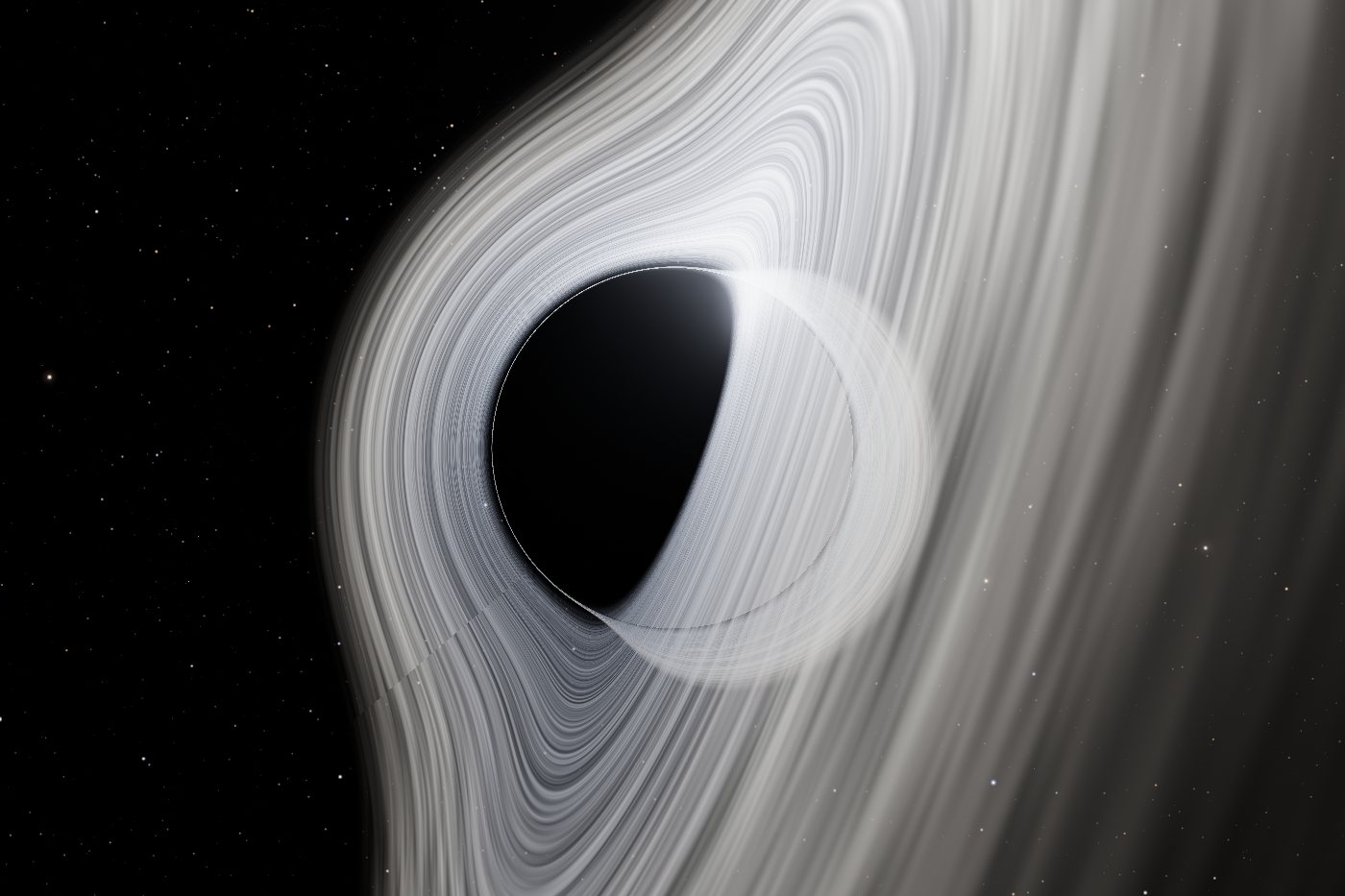
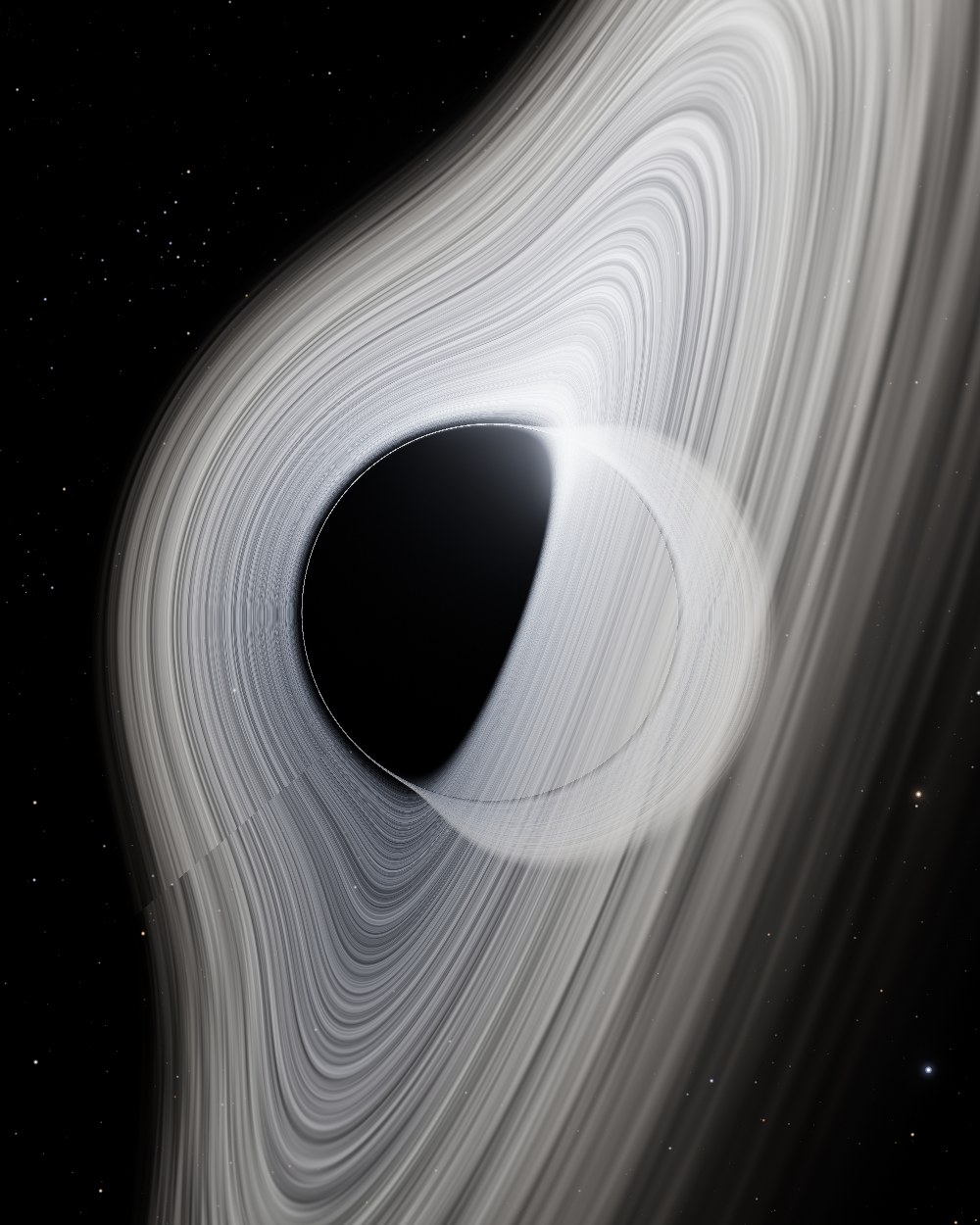
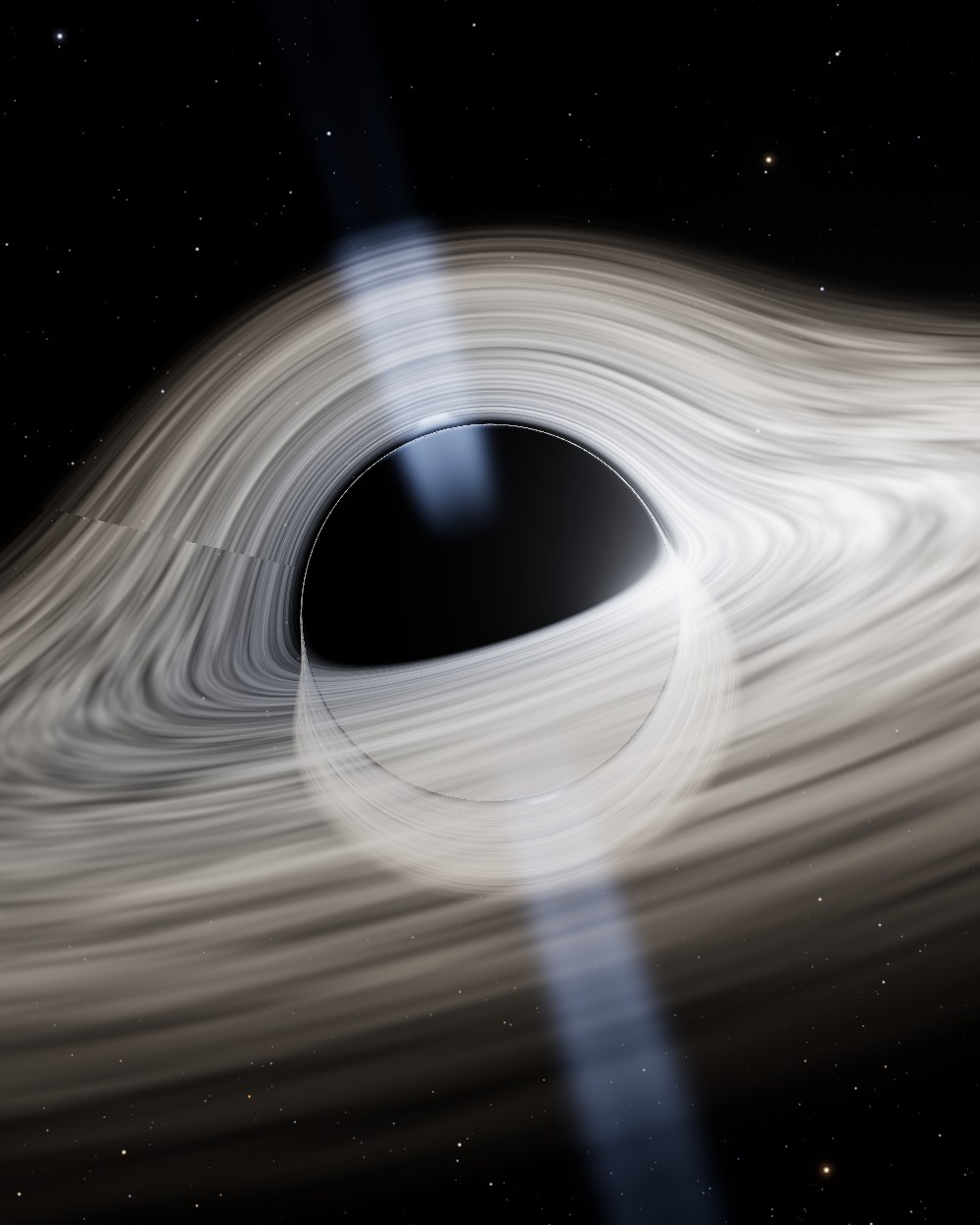
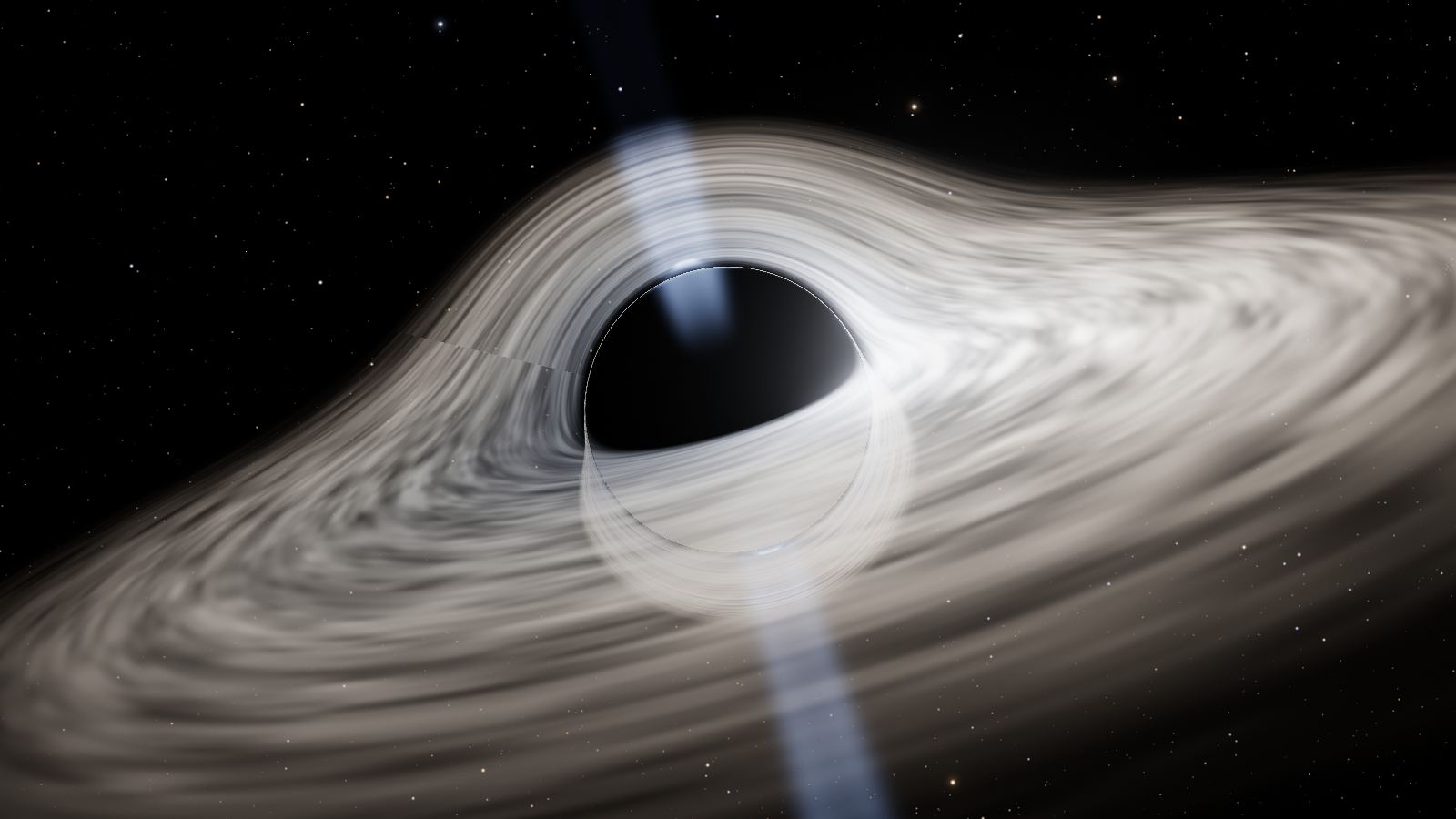
A black hole's shadow encircled by its accretion disc, lensed into a ring around the front

Light bent by gravity

Black holes are ray-marched through the Schwarzschild metric. The photon ring is not a texture or a sprite: it is light from behind the hole, bent around the front and arriving at the camera the long way. The disc appears above and below the shadow at once because you are seeing both its faces.

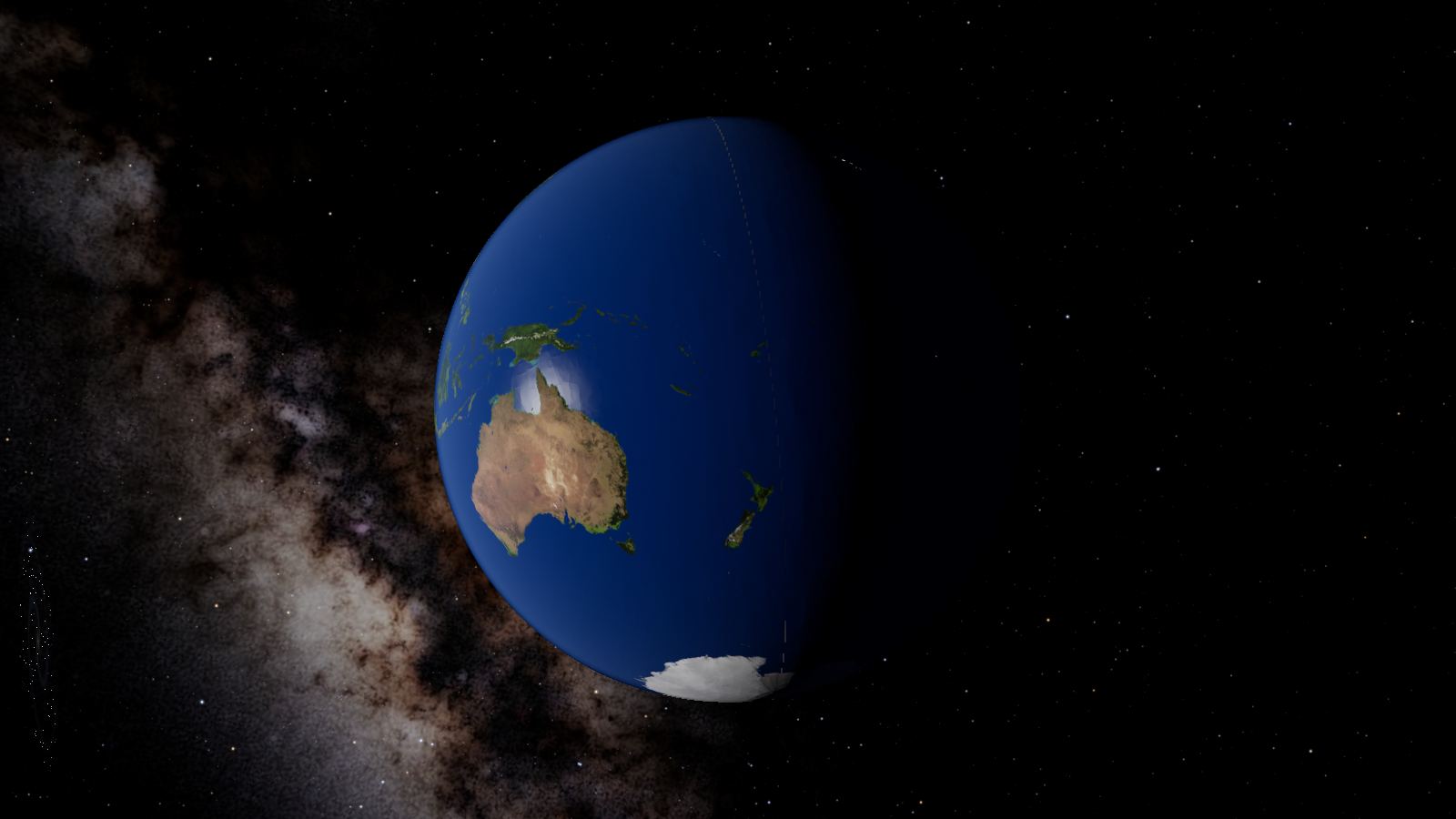
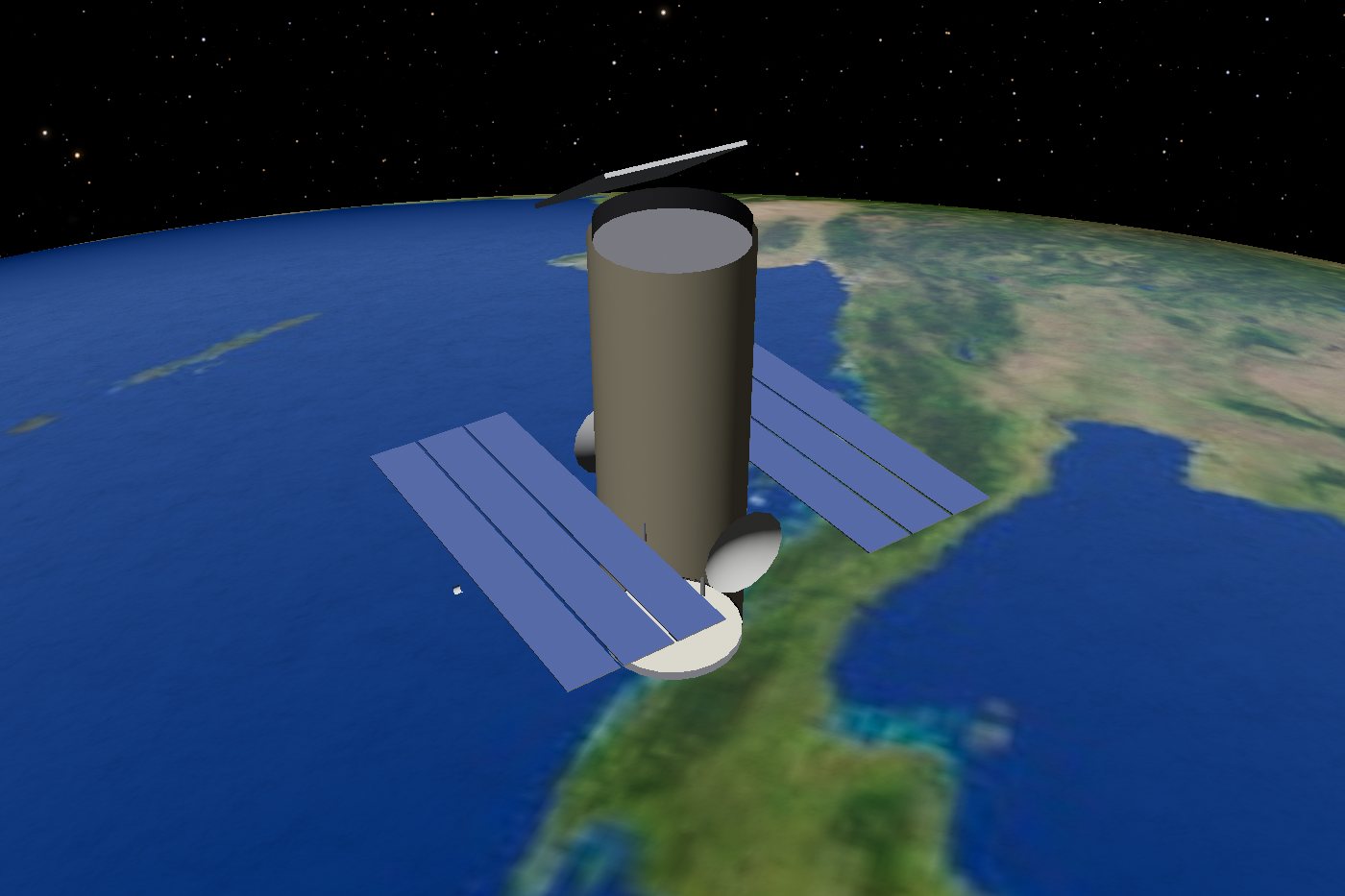
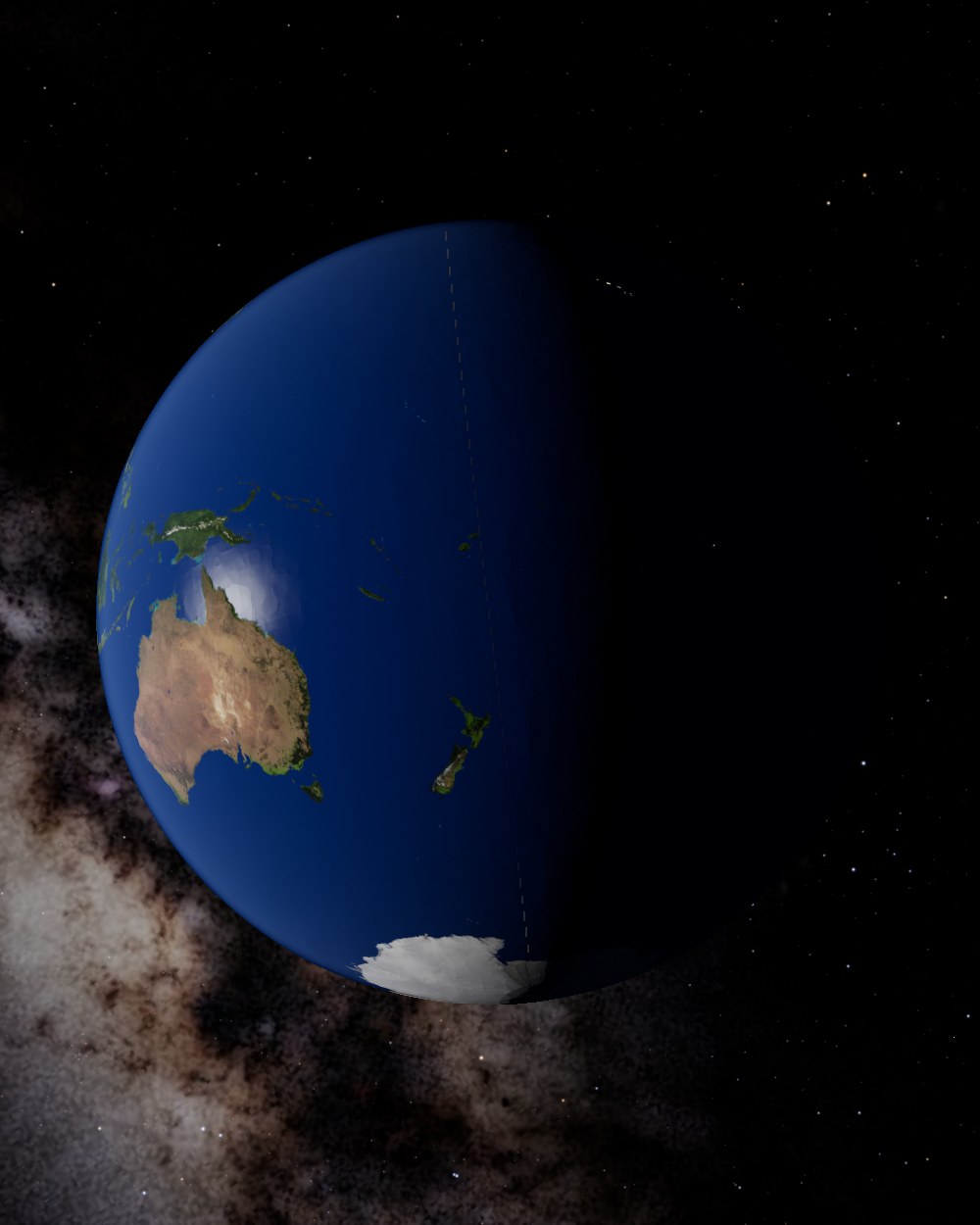
The Hubble Space Telescope in low orbit, South America beneath it

Spacecraft, where they were

A hundred and nineteen craft, landers, rovers and landing sites, each on its own trajectory rather than parked at a decorative offset. You can ride along and look out from the craft itself — above is Hubble, at its real size, over the ground it was passing.

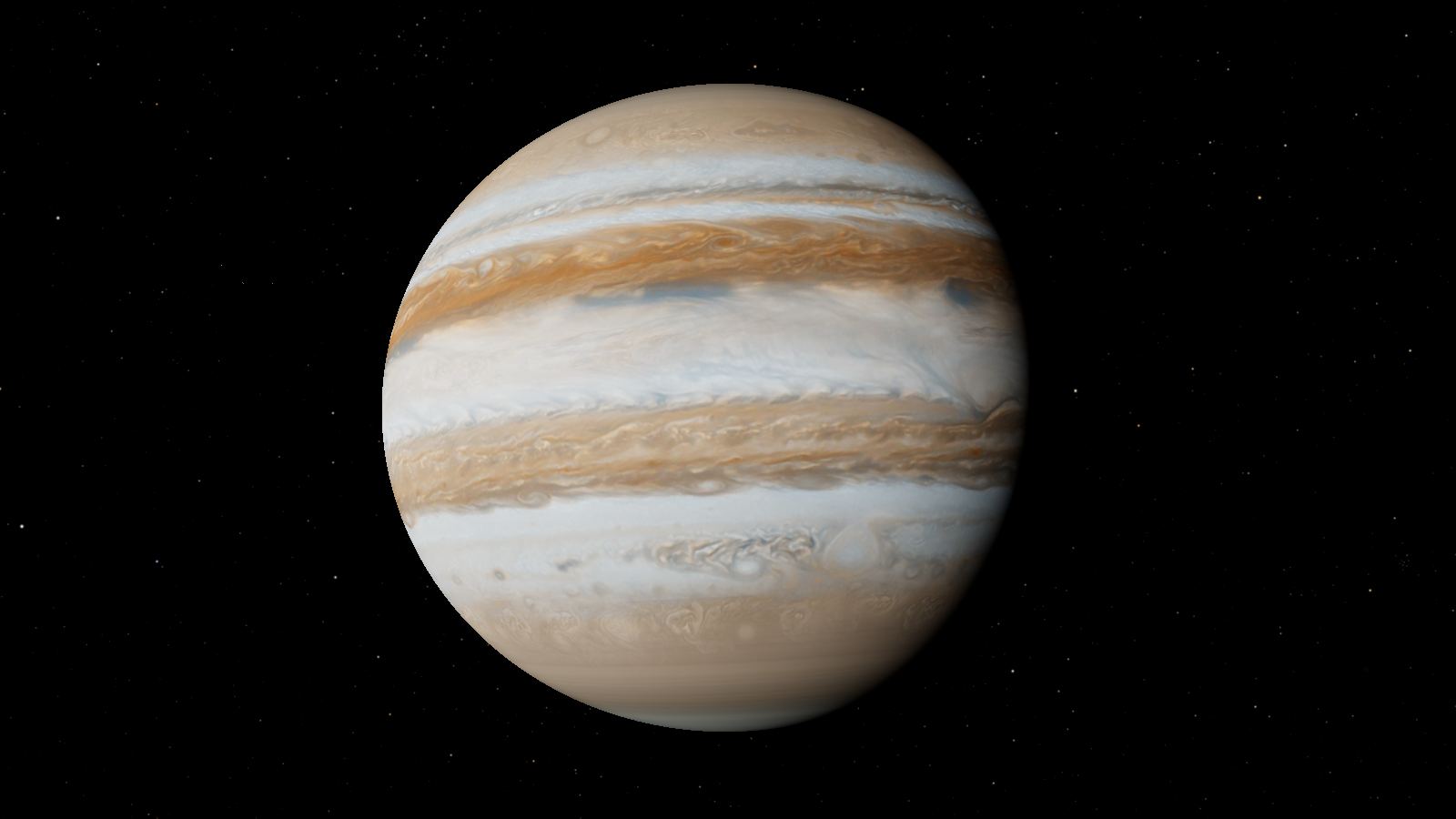
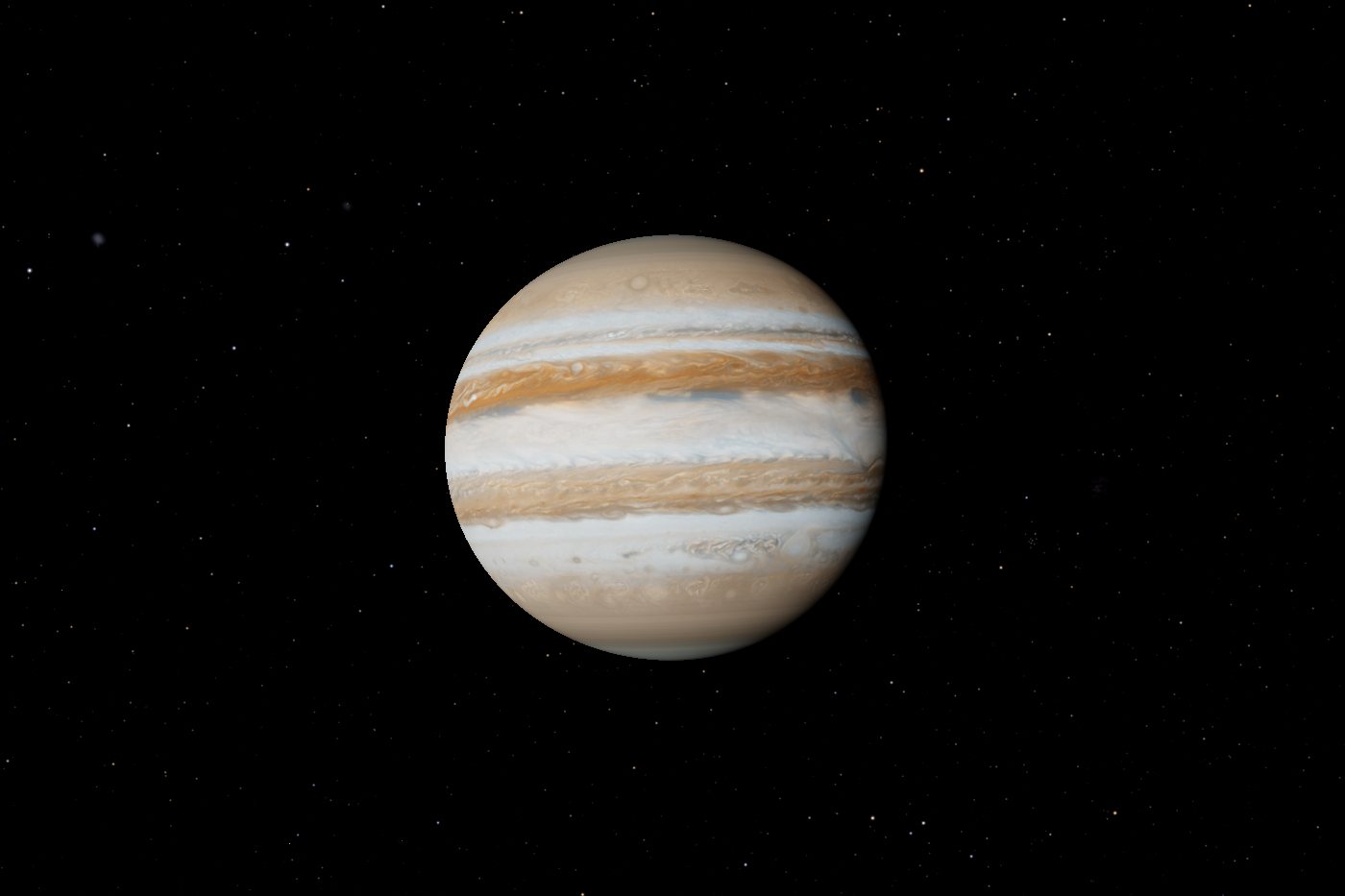
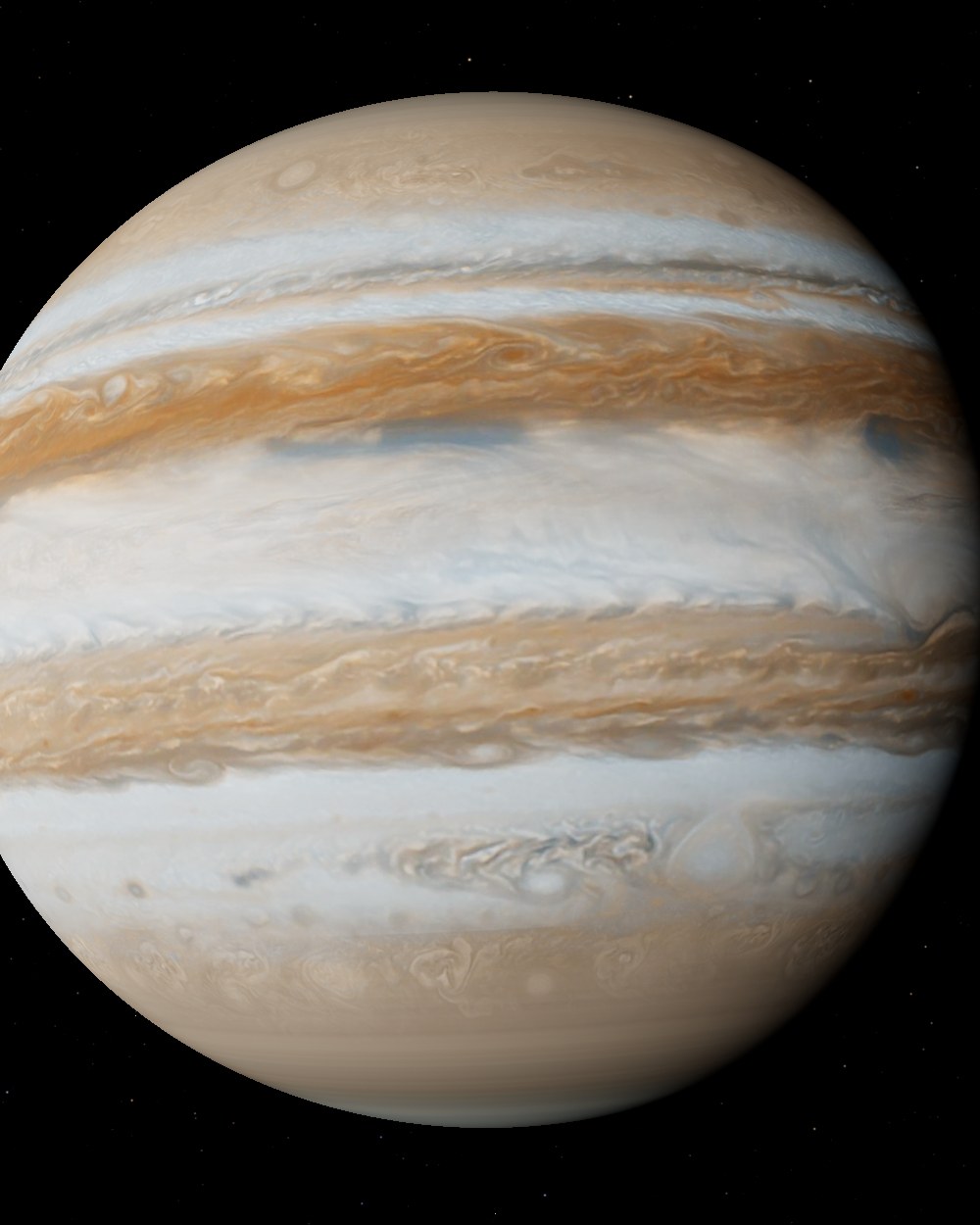
Jupiter's banded cloud tops, a terminator falling across the eastern limb

Time you can drive

Wind the clock and the whole system moves on its real ephemeris — eclipses fall where they fall, moons shadow their planets, and a spacecraft is wherever JPL Horizons says it was on that date.

Get it

Run it on your desktop

The desktop build is the same renderer with the GPU gloves off — it can ask for the discrete adapter and keep the compositor off the main thread, which a browser tab cannot.

Prefer not to install? Open it in the browser instead.

Where the numbers come from

Borrowed from people who measured it

Body imagery from Solar System Scope (CC-BY 4.0), derived from NASA elevation and imagery. Lunar elevation from the NASA Scientific Visualization Studio CGI Moon Kit, out of Lunar Orbiter Laser Altimeter data. Star data from the HYG database compiled by David Nash from the Hipparcos, Yale Bright Star and Gliese catalogues. Deep sky, constellation and asterism data from Olaf Frohn's d3-celestial. Milky Way panorama by Serge Brunier (ESO). Planetary elements from JPL; lunar theory from ELP2000 as presented in Meeus, Astronomical Algorithms. Spacecraft trajectories from the JPL Horizons system at the Jet Propulsion Laboratory. Landing site coordinates from LROC and HiRISE imagery as published by the Lunar and Planetary Institute and the USGS. Faint stars from ESA's Gaia DR3; exoplanet systems from the NASA Exoplanet Archive; galaxies from Cosmicflows-3, RC3 and HyperLEDA.

What is not measured. Nobody has photographed an exoplanet's surface, so every exoplanet's face is imagined from its size, temperature and orbit. Past the catalogues, the stars, planets, moons, black holes and galaxies you find are generated from a seed, so the same place always looks the same — but none of them was observed.